


... boosting your innovation with engineering and manufacturing solutions in the cloud...

The Semantic Information Management System (SIMS) provides a unified environment for managing complex technical and engineering data.
App related to Cloud-based Solutions Product Development Semantic Interoperability in the context of Manufacturing
Description:
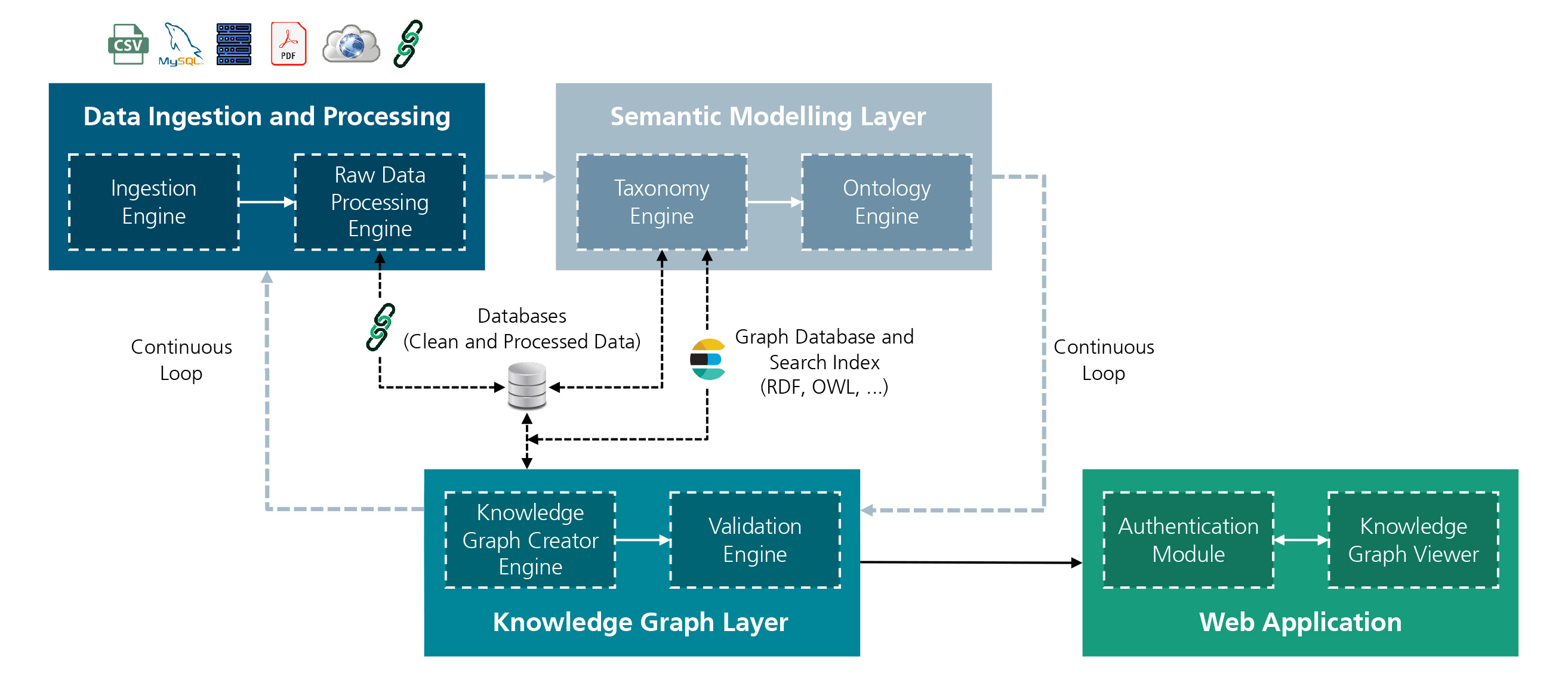
Ontologies itself cannot provide search functionalities and data evaluation. The Semantic Information Management System (SIMS) provides a unified environment for managing complex technical and engineering data. It transforms heterogeneous datasets into a semantic knowledge graph, enabling intelligent querying, reasoning, and decision-making.
Designed as a modular architecture, each layer of SIMS can operate independently, yet communicate seamlessly via REST APIs or through shared databases. This flexibility allows project teams to adopt only the modules they need, while ensuring scalability and interoperability across domains.
In today’s engineering and research environments, data is highly fragmented and spread across formats, systems, and isolated units. Traditional approaches often fail to unlock the full value of this information.
SIMS carries out the following:
By bridging the gap between raw data and actionable knowledge, SIMS becomes a strategic enabler for digital transformation, supporting innovation, compliance, and competitiveness across industries.
The Semantic Information Management System is built on four key concepts: taxonomy, ontology, knowledge graph, and semantics.
Use Case:
The web-based tools to query the data and ontology can be run in cloud or locally on a system.